
Tour historic buildings on original sites
Strawbery Banke Museum is unique among outdoor history museums for its preservation of a complete neighborhood’s evolution over more than 350 years, with most of the historic houses on their original sites.
Tour historic buildings ranging from elegant mansions to working-class homes, including a colonial tavern, a 1940s corner store, and a cooper’s shop.
-

Abbott House & Store
Year built: 1720
Year of interpretation: 1943
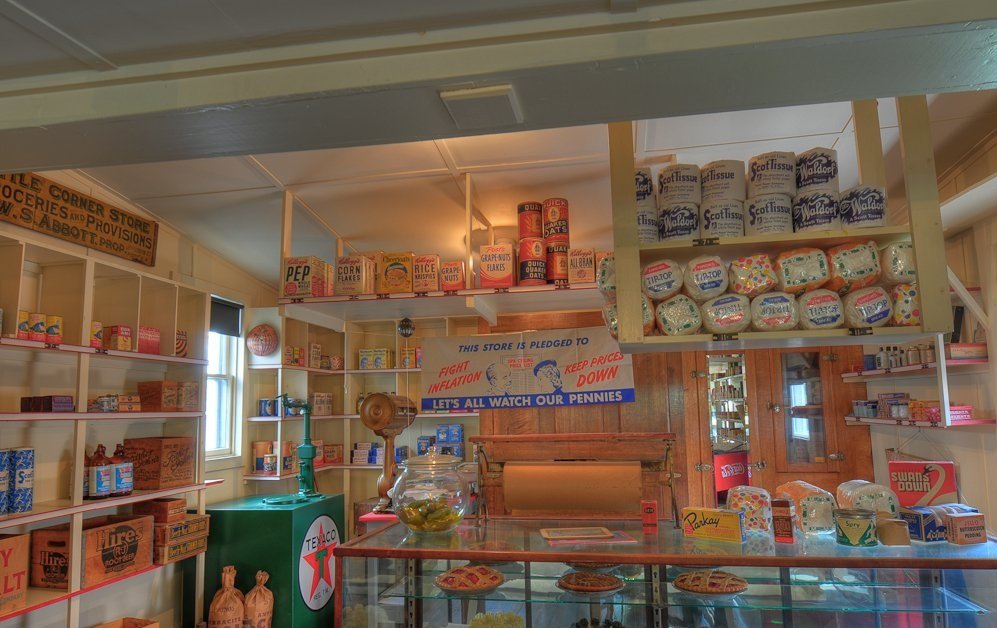
The home and store of Walter and Bertha Abbott stands on Jefferson Street. They opened their store in 1919, and after Walter died in 1938, Bertha operated the store until 1950. The Abbott Store supported the neighborhood on the home front in World War II by offering paycheck cashing, grocery delivery, and longer open hours for busy workers at the nearby Naval Ship Yard.Mom-and-pop stores like theirs were threatened with extinction by the development of supermarkets but received a new lease on life in World War II when there was a local population explosion and war-time rationing.
-

Chase House
Year built: 1762
Year of interpretation: 1818
The Chase House, on the corner of Court and Washington Street, is one of the grandest Georgian structures at Strawbery Banke. The Chase family, Portsmouth merchants, lived in the house for over a century. Stephen Chase was a graduate of Harvard College, and his wife Mary was related to the famous Pepperrells of Kittery, merchants involved in the West India trade. When Stephen Chase died in 1805, Mary and two sons, William and Theodore, continued to live in the house. The last Chase to live here was William’s widow, Sarah Blunt Chase, who died in 1881. At that time, Theodore’s son bought the house and donated it as a home for orphaned children. When the needs of the Chase Home for Children outgrew the house in the early twentieth century, it was purchased as a residence by Mrs. Thomas Bailey Aldrich. -

Cotton Tenant House South
Year built: circa 1835
Weaving exhibition
Leonard Cotton bought this property in 1834 and shortly thereafter had the Cotton Tenant Houses erected, which are the last of the extant houses to be constructed in the Strawbery Banke neighborhood. By the 1830s, Cotton was a successful retail grocer on Pleasant Street.Today, Cotton Tenant House South is a hands-on weaving exhibit with several looms available for visitors to try under the direction of an interpreter. This space is staffed based on the availability of our skilled craftspeople.
-

Pridham House
Year built: 1795
Year of interpretation: 1950sThe Shapley-Pridham House shows the domestic settings of two very different generations of occupancy. The right half shows how the Shapley family lived here in the 1790s and the left half interprets how the last families lived here in the 1950s, before Urban Renewal and the subsequent founding of Strawbery Banke.
The Pridham family lived on the left side of the building after it was changed into a duplex. In the decades prior, the neighborhood experienced socio-economic changes and as a result, many dwellings in Puddle Dock were converted to multi-family homes. The house is restored to depict the life of the young Pridham family. Blanche Pridham worked at the Liberty Street Laundry, Joe Pridham worked at the Portsmouth Naval Shipyard after returning from WWII, and their young son Sherman attended the nearby Haven School. The neighborhood was tight-knit; picnics and outings were popular, as was the Puddle Dockers baseball team and playing in the scrap metal yards. Most neighbors worked at jobs in the Navy Yard.
-

Dinsmore Shop
Year built: circa 1800
Year moved to Strawbery Banke: 1970
Cooper Demonstration
The Dinsmore shop has housed a variety of traditional crafts, primarily blacksmiths, and most recently a cooper. Both of these trades were crucial parts of urban and maritime life. Portsmouth’s coopers produced vast quantities of barrel staves for export, particularly to the West Indies where the barrels were constructed and shipped out filled with sugar, molasses, rum, and other local products. Today, Ron Raiselis, Master Cooper, performs coopering demonstrations for visitors several days a week during the season. This space is staffed based on the availability of our skilled craftspeople. -

Goodwin Mansion
Year built: 1811
Year of interpretation: 1870
Year moved to Strawbery Banke: 1963The Goodwin Mansion was the home of Ichabod Goodwin and his wife, Sarah Parker Rice Goodwin. Ichabod started his career working in a counting house as a teenager and later became a supercargo, overseeing a ship's cargo and ensuring its sale. He worked hard and soon became the captain of his ship. However, with the advent of the railroad, Ichabod gave up his life at sea to focus on merchant activities. Among other ventures, he was president of the Portsmouth Steam Factory. Like many northern industrialists, Icabod’s mill used Southern cotton, harvested by enslaved Africans, making him complicit in the system of chattel slavery.
Ichabod and Sarah married in 1827. They purchased the mansion in 1832, and went on to raise their seven children. Sarah enjoyed her expansive gardens and left behind a journal, which helped Strawbery Banke horticulturists recreate her garden design. Goodwin was elected Governor of New Hampshire in 1859 and served until the beginning of the Civil War.
The Goodwin Mansion is one of the few buildings that were moved to Puddle Dock. It was built in the Federal style and still retains much of its original woodwork. However, several Greek Revival changes have been made over the years. After 1850, other significant modifications were made to the building, including gas lighting. This can be seen in the formal parlor, where there is an existing gas pipe surrounded by a plaster rosette.
-
Jackson House
Year built: 1790
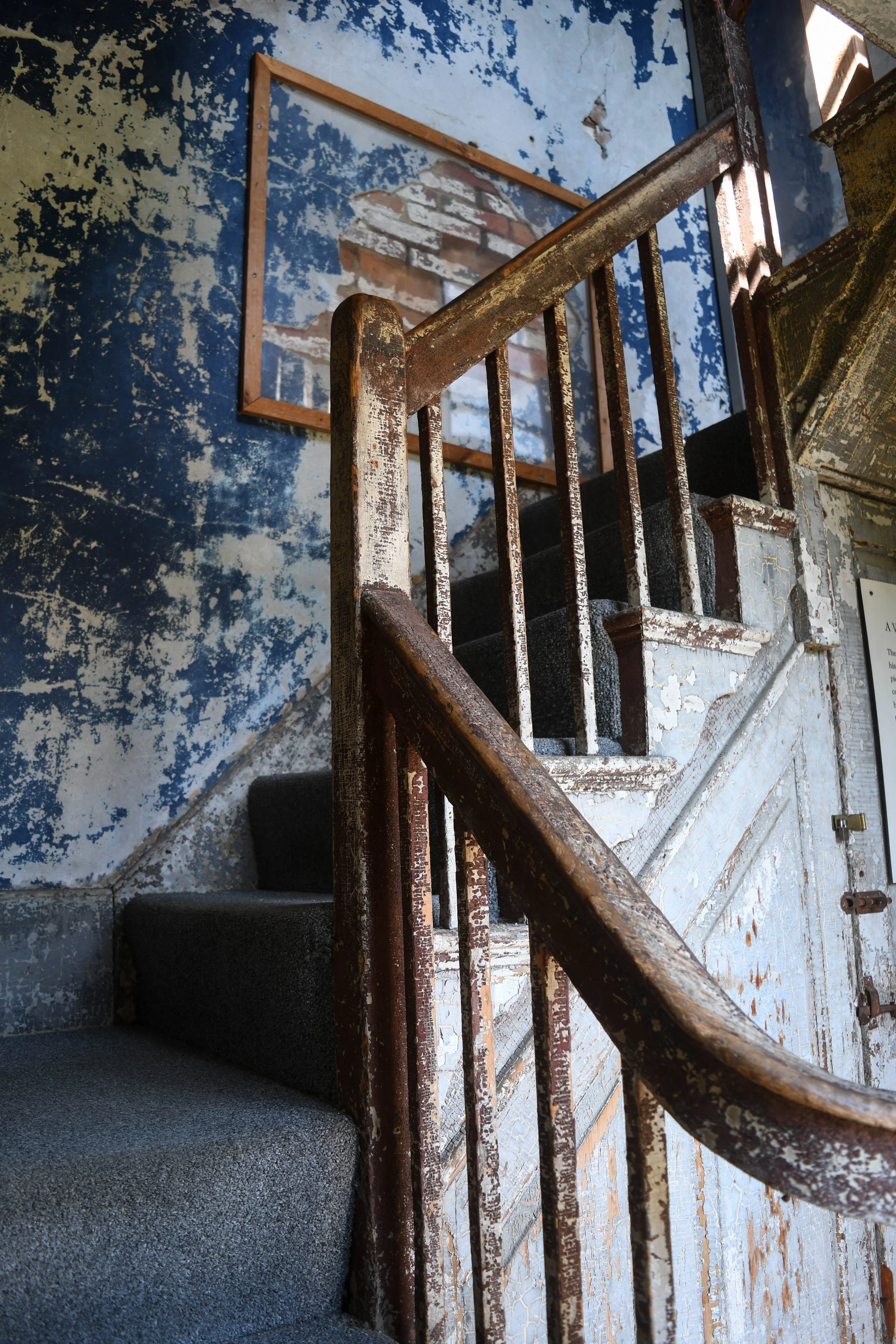
Year of interpretation: 1790 to the presentThe Joshua Jackson House was built around 1790 by the Jackson family. Today, this side-gabled house serves as an example of preservation as defined by the National Parks Service. Instead of being restored to a particular period, it showcases changes over time. The house features Federal Period woodwork and mantel pieces, as well as twentieth-century wallpaper, which covers the horsehair lathe. Alterations have been preserved so visitors can understand how the house has been changed architecturally, decoratively, and technologically over time. Visitors can also learn about the life of residents of Puddle Dock in the twentieth century through informational panels.
-

Jones House
Year built: circa 1790
People of the Dawnland exhibitionJoshua Jones purchased this house in 1796 and lived there until he died in 1843, becoming its longest resident. Architecturally, the house is an interesting look at how Georgian architecture gave way to the Federal Style.
Today, Jones House hosts an interactive exhibit exploring Abenaki culture, arts, foodways, and storytelling traditions. Visitors will learn more about the Abenaki and Wabanaki peoples of Northern New England, Southern Quebec, and the Canadian Maritime Provinces, both past and present. The "People of the Dawnland" exhibit invites visitors to touch traditional basket weaves, play with a cornhusk doll, and see what plants are growing in the Abenaki teaching garden. Archaeologists at Strawbery Banke have uncovered pieces of pottery, stone tools, and tent post holes that demonstrate the presence of the Abenaki. For over 12,000 years, they have visited the Seacoast area seasonally for hunting, fishing, and food preparation. This exhibit describes the locations of Tribal groups from present-day Newfoundland to the mid-Atlantic, their shared traditions, beliefs, and resources of their trade networks, and the family relationships of the Abenaki and other Indigenous peoples who are still here in New Hampshire.
-

Lowd House
Year built: circa 1810
Woodworking tools of the nineteenth-century exhibitionPeter Lowd, Cooper (barrel maker), purchased this house from neighbor James Drisco in 1824. The house is a simple vernacular Federal building but features elegant examples of woodwork, including the front door surround with its delicate fanlight and pilasters, and some existing interior trim. The southern portion of the house was added to an early Georgian structure, resulting in the building’s L-shape.
Lowd's work as an artisan makes the house appropriate for an exhibition on trades, where visitors can view woodworking tools of the nineteenth century. Wood was an important resource for Portsmouth from the city's founding through the advent of the Industrial Revolution. The Lowd House exhibit features trades such as boat building, brewery work, cabinet making, block making, and coopering.
-
Penhallow-Cousins House
Year built: circa 1750
Period of interpretation: 1937-1943
Year moved to Strawbery Banke: 1862
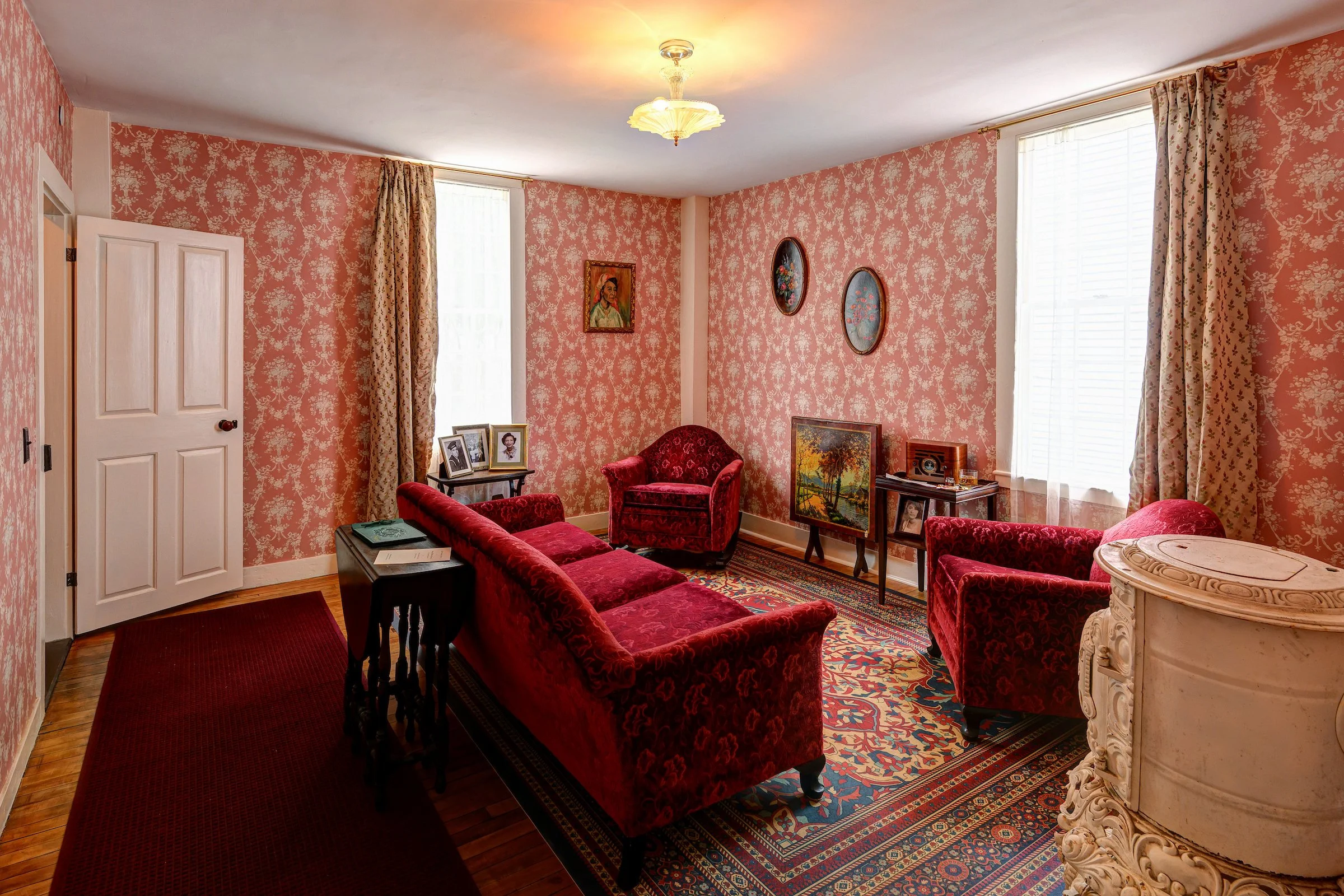
The Penhallow-Cousins House was originally built in 1750 as a single-family home. It was moved to its present location in 1862 from where it was built nearby. At that time, the house was altered into a multi-family home, and by 1937, the Cousins family was residing in one-third of the building at 91 Washington Street.Kenneth, Eleanor, and Geraldine (Jeri) Cousins lived in the house from 1937 to 1943. Oral histories from family and friends, archaeological evidence, and donated objects from family members have allowed the Museum to recreate the family home accurately. Jeri shared memories from her childhood in the 1930s and early 1940s, including the layout of her house, her experience as a Black child in a predominantly white community, and the lives of her parents. She has vivid stories of fishing with her grandfather, being watched by her neighbor “Aunt Kate,” where her family shopped, and what her mother cooked for Sunday dinner. Her parents worked in the service industry for wealthy families in Rye, Eleanor as a maid and Kenneth as a chauffeur. The Cousins’ story is one of the Great Migration and how a Black family made their way in Portsmouth.
-

Reproduction Wigwam
Temporarily Absent, Pending Reconstruction
Year built: 2021
Wigwam is the word for “house” in the Abenaki language. In 2021, museum staff worked with the Cowasuck Band of the Pennacook-Abenaki People and the Indigenous New Hampshire Collaborative Collective to build the frame for a wigwam on the museum grounds, near the location of a possible post mold uncovered during archaeological excavations in 2015.The frame of this Wigwam was made from young red maple saplings; however, red willow or swamp maple can be used. Saplings are bent and woven together to make a domed shape. Once the frame is constructed, it is tied together in order to ensure a secure structure. A doorway is created facing east, in the direction of the rising sun. A wigwam would typically then be covered with birch bark, red oak bark, or elm bark, in order to create a dry, warm shelter that would last anywhere from 2 to 5 years.
-

Rider-Wood House
Year built: 1800
Period of interpretation: 1830sThe four-room Rider-Wood House is typical of the vernacular architecture of Puddle Dock and the surrounding South End. John and Mary Rider, immigrants from Devon, England, purchased the house in 1809 and later added an ell where they operated a shop. After John's death in 1818, Mary continued to run the shop and manage their other business interests. As a widow with no children, Mary had control over her own finances, allowing her to sponsor many of her nieces and nephews' voyages to America from England. Several of them lived with her until they settled.
Rider-Wood is an excellent example of how Strawbery Banke uses archaeology to inform the interpretation of the houses. Uncovered artifacts included ceramics, glass, animal bones, and more. Museum curators used this information to locate ceramics for display that matched ceramic sherds and to better understand the family's diet.
-
Shapiro House
Year built: 1795
Year of interpretation: 1919
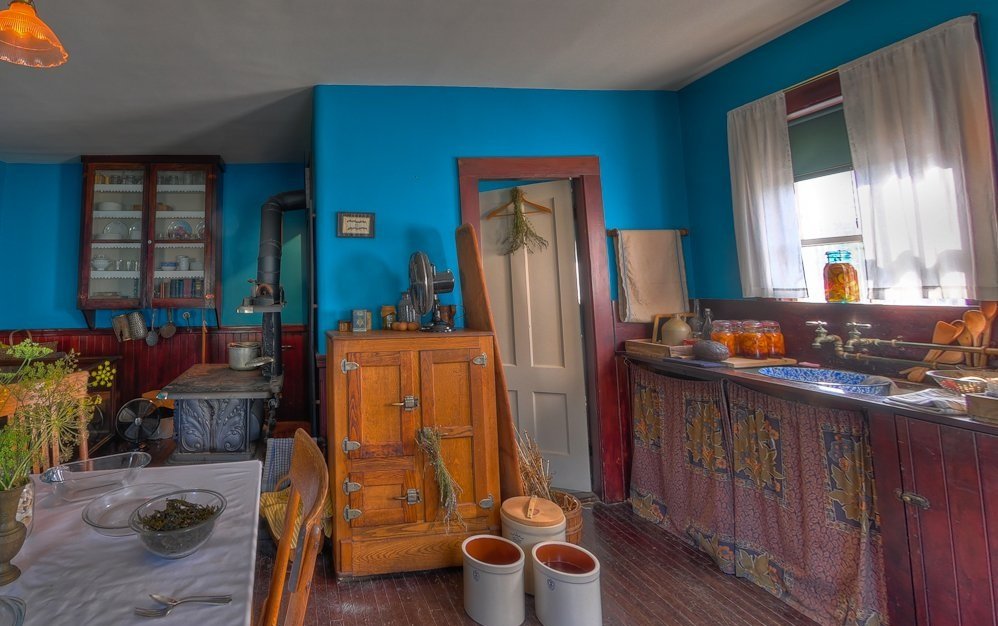
The Shapiro House was home to Sheva and Avrum Shapiro, and their daughter Mollie. Sheva and Avrum were Jewish immigrants from Anapol in Ukraine. Their family arrived in the U.S. in what is known as a “chain migration.” In 1898 Avrum’s brother was the first to immigrate; he worked to save enough money to bring other family members to Portsmouth, and by 1904, five brothers and their wives and children were living here. The family were significant members of the local Jewish community, helping to found and lead Temple Israel.At this time, Puddle Dock was a crowded place. Many houses, which were once single-family homes, were converted into apartments where people from all different countries lived side by side.
-
Shapley House
Year built: 1790
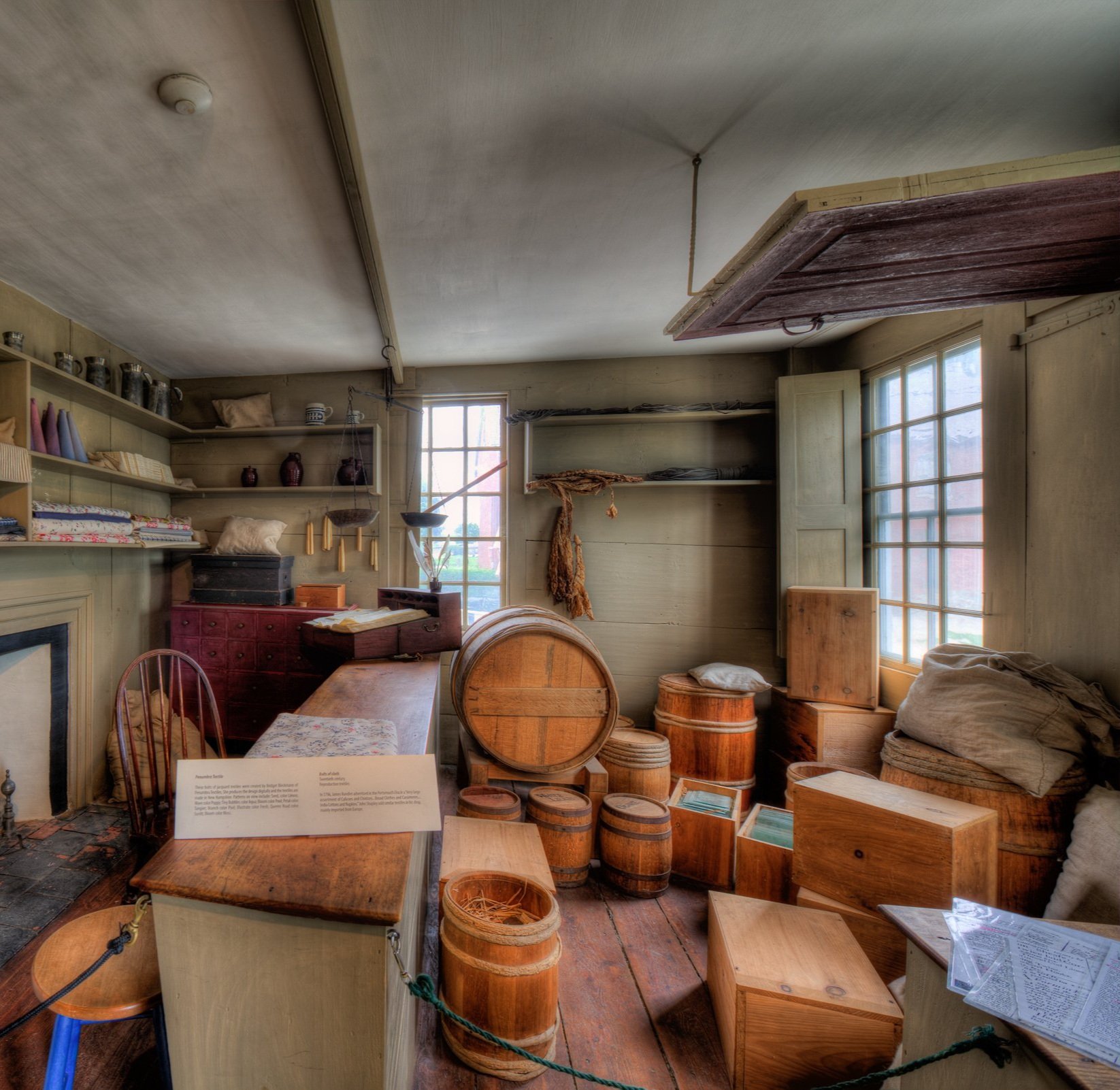
Period of interpretation: 1795The Shapley-Pridham House shows the domestic settings of two very different generations of occupancy. The right half shows how the Shapley family lived here in the 1790s and the left half interprets how the last families lived here in the 1950s, before Urban Renewal and the subsequent founding of Strawbery Banke.
The Shapley House and Shop was the home of Catherine and John Shapley and their three daughters. Built on the edge of the Puddle Dock tidal inlet, the house was perfectly located for the family to operate a shop where they sold goods Captain Shapley brought home from coastal trading trips. Wharves lined the inlet’s shores, allowing small ships like Captain Shapley’s to dock and unload imports. The three Shapley daughters likely helped to tend to the shop while their father was away.Built as a single-family home, the two-story building demonstrates a plain vernacular style as building trends moved toward Federal period architecture. In the late nineteenth century, the building was split into a duplex, including removing a single front door and the addition of the separate two-door entrances visible today.
-

Sherburne House
Undergoing restoration.
Year built: 1695
The Sherburne House is one of the last three wood-framed houses from the 1600s still standing in New Hampshire. This two-story, single-cell, chimney-bay house was built by John Sherburne sometime between 1695 and 1698, the year of his death. In the first quarter of the 18th century, residents included John’s widow Mary and their son Joseph, Joseph’s wife and children, and an enslaved man and woman whose names are unrecorded. In 1957, when faced with the imminent demolition of the house to clear a path for an Urban Renewal project, local advocates made the fate of the Sherburne House the focal point of a public effort to save the historic buildings of Portsmouth’s earliest neighborhood around Puddle Dock. -

Stoodley's Tavern
Year built: 1761
Year moved to Strawbery Banke: 1966
Education Center and Administrative Offices
James Stoodley kept The King’s Arms Tavern (built in 1753), on State Street. During the 1750s Stoodley served in the French and Indian Wars as a British Ranger with Major Rogers. This tavern burned to the ground in 1761 and Stoodley immediately built the new one which survives today. The tavern was home to James Stoodley and his wife, a daughter Elizabeth, a son William, and two enslaved Africans, Frank and Flora. Stoodley also hosted auctions in this building; enslaved Africans were sold in 1762 and 1767, along with barrels of rum and bags of cotton.In 1964, Stoodley's Tavern was scheduled for demolition to make room for a new federal office building and post office. In 1966, the building was moved to Strawbery Banke and placed along Hancock Street. Today, the building serves as an Educational Center and offices and is used for year-round camp and classroom programs.
-
Thomas Bailey Aldrich Memorial
Year built: circa 1797
Year of interpretation: 1909
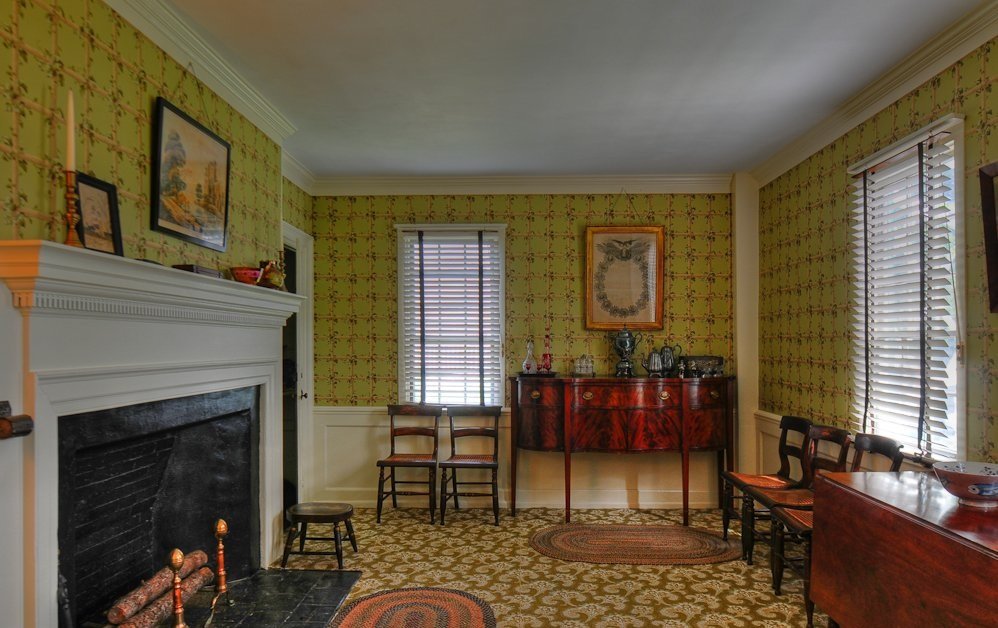
Portsmouth merchant Thomas Bailey purchased this house in the first quarter of the nineteenth century. His grandson Thomas Bailey Aldrich visited the home in the 1850s as a child and set his fictitious novel "A Story of a Bad Boy" there. Aldrich’s publication success led to him making friends within literary circles (such as with Mark Twain and Henry Wadsworth Longfellow) and becoming editor of The Atlantic Monthly, today known as The Atlantic.Upon his death in 1907, his widow Lilian purchased the Aldrich House and created a memorial to her husband. Each room was recreated using imagery from The Story of a Bad Boy and reflects the nostalgic Colonial Revival style of the early 1900s. The Thomas Bailey Aldrich House Museum opened a year later and ran as a memorial until the Second World War.Strawbery Banke re-opened the house in the 1990s to reflect how it looked at its 1908 opening.
-

Walsh House
Year built: circa 1796
Year of interpretation: circa 1800
Located on Washington Street, the Walsh House was built in c. 1796. Sea captain Keyran Walsh, his wife Sarah, and their five children lived in the house from 1797-1807. Walsh, an Irish immigrant, captained ships and successfully traded in New Hampshire lumber and West India goods, traveling to ports around the Atlantic. While successful in his trade, Walsh was in a dangerous occupation, battling restrictive Spanish trade laws and trying to avoid the British Navy; in 1799, he lost his ship and her cargo after an encounter with a British man-of-war. He died on a voyage from South America to Charleston, South Carolina, in 1807. In 1969, the house was moved about 80 feet north of its original location and was placed on a new foundation.The hands-on exhibit of the Walsh House creates a fully immersive experience that brings the world of a sea captain and his family to life circa 1800. Unlike the Museum’s other furnished and exhibit houses, the Walsh House’s first-floor rooms are furnished with touchable, reproduction objects. Visitors are invited to sit at the dining table, lie on the bed, open drawers, and try on costumes to better understand everyday life in 1802 and draw connections between the past and present.
-

Wheelwright House
Year built: 1784
Historic Foodways DemonstrationVisitors to Wheelwright will be greeted by a demonstration of how food was prepared in the eighteenth century. Interpreters show guests how they gather and store seasonal ingredients to aid in cooking over an open hearth. For example, hearth cooks may prepare an apple pie but also show how apples are dried or made into chutney for use over the winter months.
Wheelwright House was the home of John Wheelwright, who captained merchant vessels out of Portsmouth Harbor, and his wife and two children. When the American Revolution began, he served aboard the Portsmouth-built Raleigh and various privateering ships. When he died in debt to his creditors, his wife Martha stayed in one-third of the house after it was sold at auction, as provisioned by inheritance laws at the time. The house is a simple Georgian structure with notable woodwork, including a triangular door pediment, mimicked over the first floor and side windows, and the fluted pilasters flanking the front door.
-

William Pitt Tavern
Year Built: 1766
Year of Interpretation: 1777
Pitt Tavern was the home of John Stavers, an English immigrant who settled in Portsmouth around 1750, and his family. In 1777, the household consisted of John and Catherine Stavers, their five youngest children, and an enslaved man named James, who provided much of the labor that kept the tavern running. Built in 1766, the tavern was not just the Stavers’ family home, but their place of business. Like other Portsmouth taverns, Pitt Tavern provided food, drink, lodging, and a public space for events and socializing. It served another important function in the community by being the Portsmouth terminus of the Flying Stage-Coach, which traveled between Portsmouth and Boston.During the Revolutionary War, Pitt Tavern would have been the site of constant political discussions. The tavern was suspected of having loyalist leanings, and a riot in front of the building led to John Stavers’ arrest, eventual release, and the official clearing of his name by the Portsmouth Committee of Safety.
-

Yeaton-Welch House
Temporarily closed to visitors for restoration
Year built: between 1794-1803
Situated at the very center of the Museum site, facing Puddle Dock, the Yeaton-Welch House is one of the last remaining houses on the site in need of full restoration. For many years, the house has served as a storage area for the Museum’s archeological materials.Plans are underway to restore the interior of the house and interpret the Welch family, Irish immigrants who were long-term residents of the Yeaton-Welch House from circa 1855 to 1910.
Authentic recreations of rooms from the 1860s and early 1900s will highlight both struggle and resilience, while artifacts uncovered on-site will connect the Welches’ journey to Portsmouth’s broader immigrant past. Exhibits will also explore anti-Irish sentiment of the times, social and sanitary reforms, and the impact of the Portsmouth Naval Shipyard, where Michael Welch found steady work.
-
Timothy Winn House
Year built: 1795
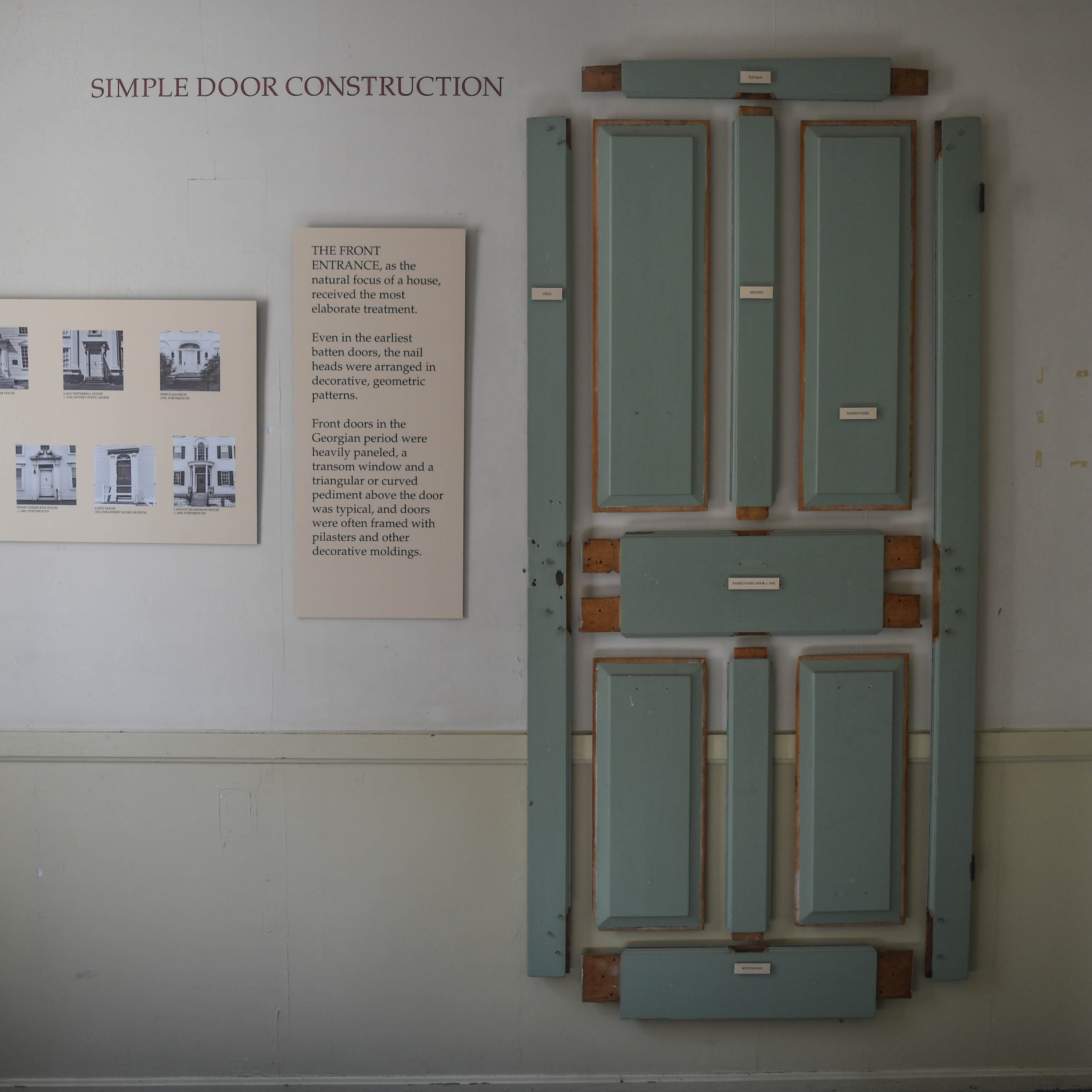
To Build a House exhibitionTimothy Winn built this house right next to his brother-in-law's newly built house. Though they look like they share a common wall, the Winn and Yeaton Houses each have their own separate frame. The interiors of the two homes are distinctly different. Winn House was built with a central hallway design and two chimneys on each side. The two rear stairways and two kitchens reflect that this house was designed for two-family occupancy. In the twentieth century, the large Winn House was divided further into apartments.
Winn House contains an exhibit entitled "To Build A House." This exhibit, partially funded by a grant from the National Endowment for the Humanities, shows the various steps in constructing a house of this period, and displays tools of the craftsmen who built such houses.
-

Yeaton House
Year built: circa 1795
Port of Portsmouth: War, Trade & Travel ExhibitionYeaton House, with a central chimney and stair hall, demonstrates the architectural transition from the Georgian to the Federal style with interior paneled walls, denticulated crown moulding, and stylized fireplace surrounds.
The Port of Portsmouth exhibition explores the maritime history of Portsmouth and how it affected the lives of Puddle Dockers. A largely working-class neighborhood, Puddle Dock supplied the workforce to build large ships, harvest the rich waters of the Piscataqua, crew trade missions and war-going vessels, and offer foreign goods for sale. First-person accounts from aboard the USS Kearsarge provide insight into the Civil War, and eighteenth-century letters reveal that the Portsmouth Naval Shipyard was where the Continental Navy was launched. The exhibit features numerous models of ships built in Portsmouth, a recreated shipping office, and decorative arts relating to the maritime industry. A small room is dedicated to the Portsmouth Naval Shipyard.